Why Tuscan Bread Skips Salt
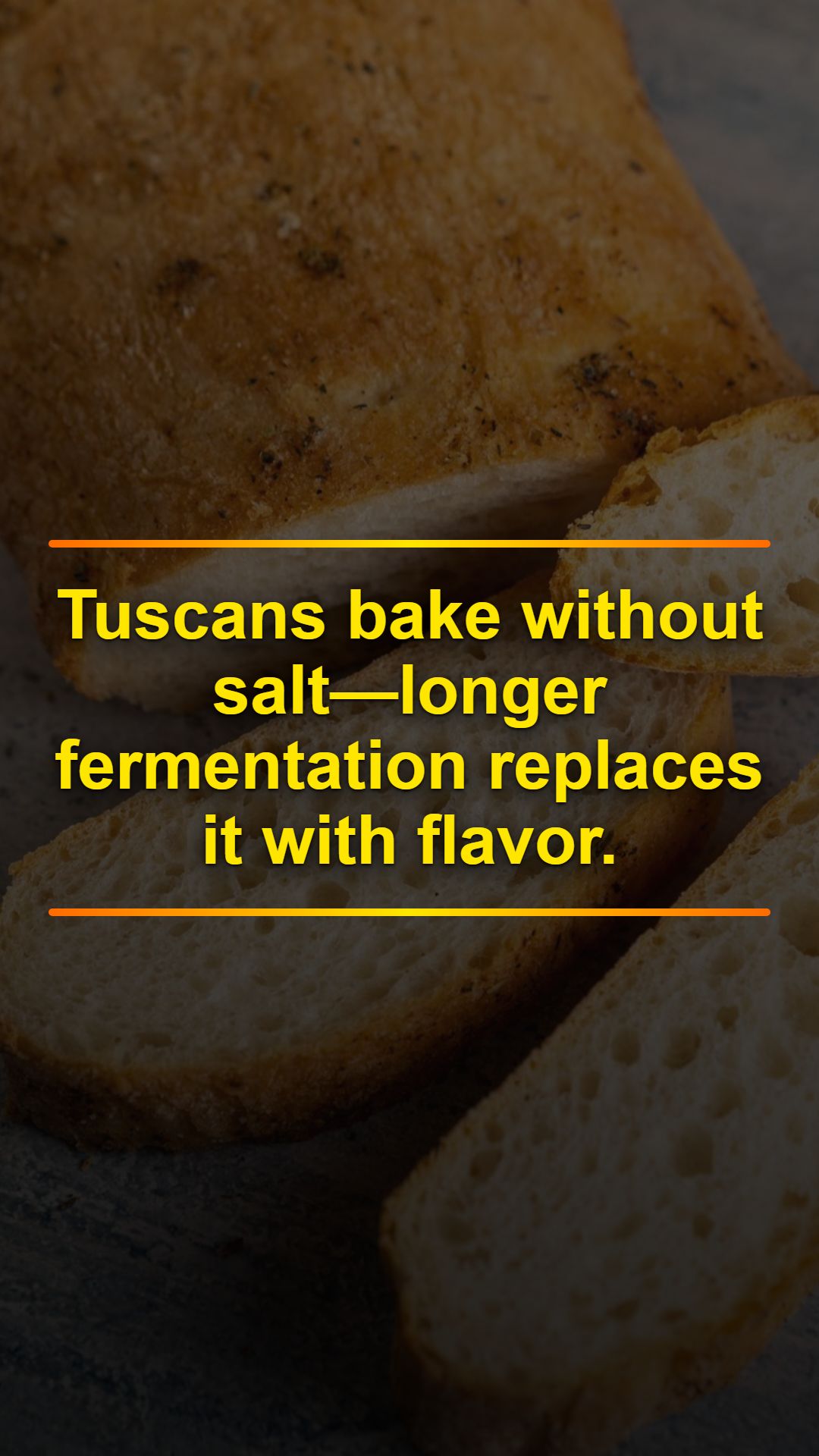
Tuscan bakers have perfected the art of making bread without salt—a technique that seems counterintuitive until you understand how fermentation works. While most bread traditions rely on salt for flavor and texture control, Tuscan breads prove that time and chemistry can deliver complexity that rivals any salted loaf. The result is a range of regional varieties, each with its own surprising technique for building flavor and structure.
1 No Salt Fix
Historically, Tuscan bakers skipped salt partly for cost, but the tradition persists because it works beautifully. During extended fermentation, wild yeasts and bacteria develop organic flavor compounds—sourness, nuttiness, and depth—that salt would otherwise mask or overshadow. Without salt to suppress fermentation activity, these subtle tastes flourish naturally. This approach also makes the dough more forgiving and extensible, requiring less aggressive kneading.
2 Wine In Dough
Ciabatta's signature softness comes from dough that's 65–75% hydration—meaning the dough is nearly as much water as flour, creating a sticky, wet mass that's tricky to handle but yields an open crumb. The addition of white wine adds subtle acidity and fermentable sugars that boost yeast activity and introduce a delicate fruity note. This combination of wine and high water content requires a strong mixer and proper technique, but the payoff is bread with irregular holes and a tender, almost creamy interior.
3 Split-Bake Technique
Pane Carasau, a Sardinian cracker bread, starts as a puffy round that's baked once until set and pale. The baker then carefully splits this round horizontally into two thin layers—a delicate operation that requires the first bake to create just enough structure without browning. Each layer is then returned to the oven for a quick second bake until crispy and golden. The result is an exceptionally thin, crunchy bread that stores for weeks and was historically made for shepherds who needed portable, long-lasting food.
4 Long Fermentation
Pane di Altamura, a PDO-protected bread from Puglia, requires 18–20 hours of bulk and final fermentation—a timeline that may seem excessive but allows the dough to develop remarkable flavor and digestibility. The extended rest gives enzymes time to break down gluten, making the bread easier to digest, and allows wild yeasts to ferment slowly, creating organic acids that add tang and shelf life. Bakers use cooler temperatures to stretch the timeline, preventing over-fermentation while deepening flavor.
5 Michetta's Knob
Michetta Lombarda, a square bread from Lombardy, is defined by a central knob or internal rib that runs through the middle of the loaf from crust to crust. This knob is created intentionally during shaping and serves to organize the crumb structure, preventing large voids and promoting even fermentation. The knob also makes the bread easier to tear apart by hand—a practical design feature that shapes both texture and eating experience. It's an elegant example of how Tuscan bread tradition combines function with form.
Tuscan bread techniques—salt-free fermentation, wine-laced dough, multi-stage bakes, and structural innovation—reflect centuries of experimentation and constraint. Each method solves a specific problem or maximizes an available ingredient, and together they prove that tradition isn't about dogma—it's about smart, delicious solutions that time has validated.