Rome's Star Bread: Perfect Hand-Tear Portions
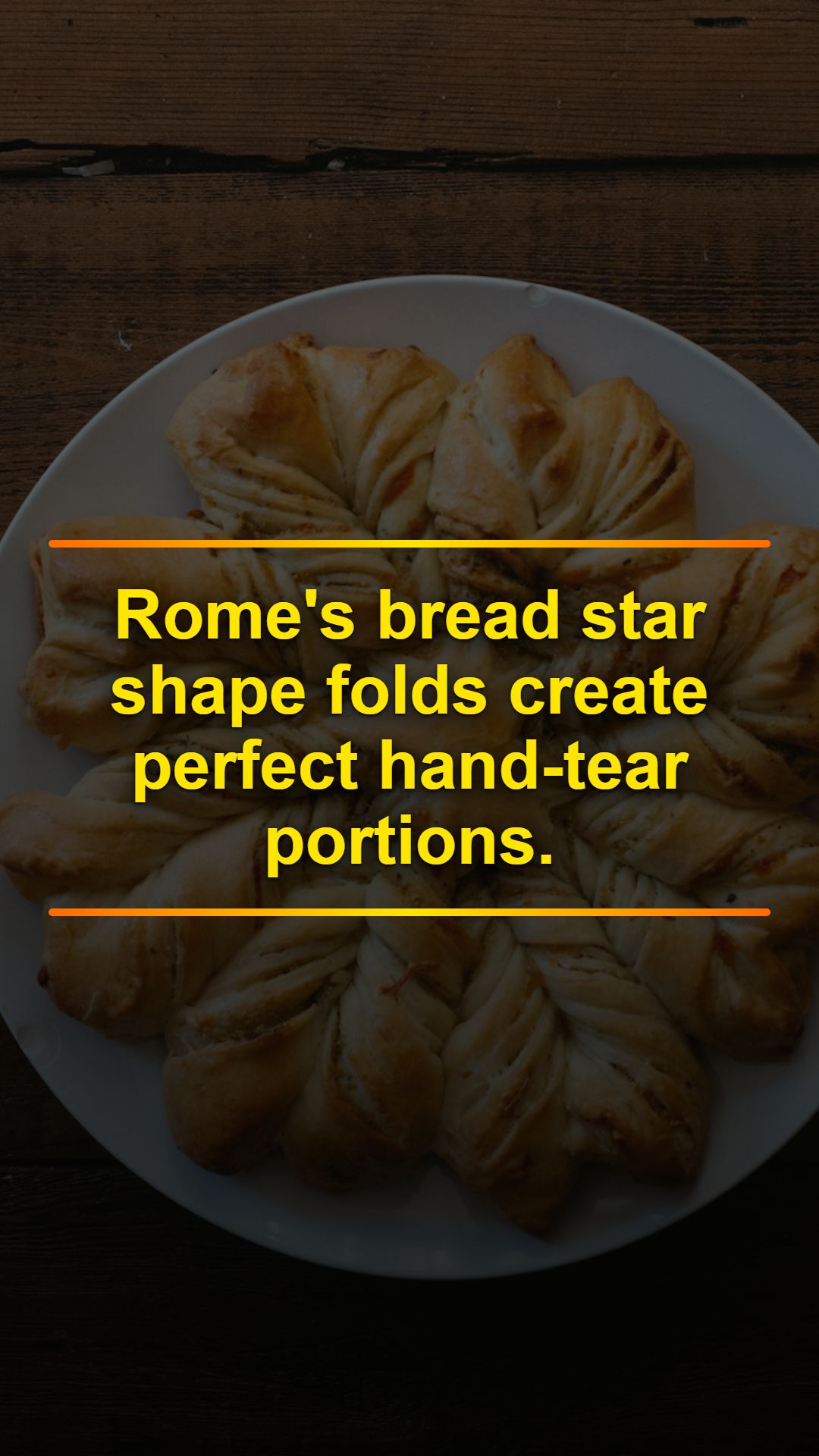
Rome's Rosetta bread is instantly recognizable by its six-pointed star shape, but that distinctive fold isn't just for looks—it's built into the dough to let you tear the bread cleanly by hand into perfect portions. This clever design is a hallmark of Italian baking, where form and function intertwine. Across Italy, regional breads showcase similar thoughtful details: dimples, spirals, and scoring that serve practical purposes while marking each loaf's origins and family identity.
1 Star Shape Fold
The Rosetta's star shape is created by folding the dough in a specific way before baking, and the resulting seams are exactly where the bread naturally wants to tear apart. When you pull the bread along these lines, each point creates a manageable portion that's still soft inside with a lightly crispy exterior. This design makes Rosetta ideal for dipping into soups or passing around a table—no knife needed, and no awkward sawing that can squeeze the crumb.
2 Fingertip Dimples
Focaccia Ligure, a flatbread from northwest Italy, features hundreds of small dimples pressed into the dough with fingertips before baking. These dimples aren't decoration; they trap pockets of olive oil and salt that pool during baking, creating bursts of flavor in every bite and keeping the bread moist. Bakers use a technique called "dimpling," pressing gently to create just the right depth—too shallow and the oil runs off, too deep and you reach the base.
3 Alpine Rye Mix
Pane Nero Alto-Adigese, a dark rye bread from the Alto Adige region in northern Italy, gets its earthy flavor and deep color from a blend of rye and wheat flours, often with caraway seeds for a subtle spice note. This combination reflects the Alpine tradition and cooler mountain climate where rye thrives, and it keeps longer than pure wheat bread thanks to rye's moisture-holding properties. The result is a hearty loaf that pairs beautifully with cured meats and cheese—comfort food built into the grain bill.
4 Family Identifier
In centuries past, when entire villages shared a communal oven, families would mark their Pagnotta loaves with a unique spiral score across the top so bakers could identify each family's bread after baking. This tradition isn't just history—the spiral scoring also helps steam escape evenly during baking, preventing the top from splitting unpredictably. Many bakeries still use similar marking systems today, turning practical necessity into a signature.
5 Filone Variations
Filone, a slender Italian "thread" loaf, varies dramatically from region to region: some versions use higher hydration (wetter dough) for a more open crumb, others blend in semolina for sweetness, and fermentation times stretch from overnight to three days depending on local tradition and climate. This flexibility means a Filone from Rome tastes notably different from one baked in Liguria, even though both follow the same basic elongated shape. It's a perfect example of how Italian bakers adapt a single bread concept to their local ingredients and rhythm.
From Rome's practical star fold to the Alpine rye of Pane Nero, Italian regional breads are lessons in design thinking—where every fold, dimple, and score solves a real problem while honoring tradition. These aren't decorative flourishes; they're evidence of centuries of bakers solving how to portion, flavor, mark, and bake bread for their communities. The next time you tear into a piece of Rosetta or taste the herb-flecked crumb of a Filone, you're tasting thoughtful design as much as flour and water.